Heat Exchanger Servicing and Maintenance Service in Pune Maharashtra
Platex India provides professional heat exchanger servicing solutions including inspection, chemical cleaning, re-gasketing and performance optimization for industrial heat transfer systems.
Professional Servicing for
Heat Exchanger
Heat Exchanger Servicing involves the methodical inspection, cleaning and maintenance of heat exchangers to ensure superior thermal efficiency and productivity. This process includes the removal of fouling, scaling and deposits that accumulate on heat transfer surfaces. It helps maintain productive thermal performance and system reliability. Modern cleaning techniques such as Cleaning in Place (CIP) systems are often used for this purpose. These systems support internal cleaning without requiring disassembly of the equipment. The servicing procedure comprises checking for leaks, corrosion and mechanical wear, followed by cleaning methods that may involve chemical solvents or mechanical brushing depending on the exchanger type such as shell and tube, plate or air-cooled. Regular servicing ensures consistent heat transfer rates, reduces downtime and maintains safety standards by preventing failures.
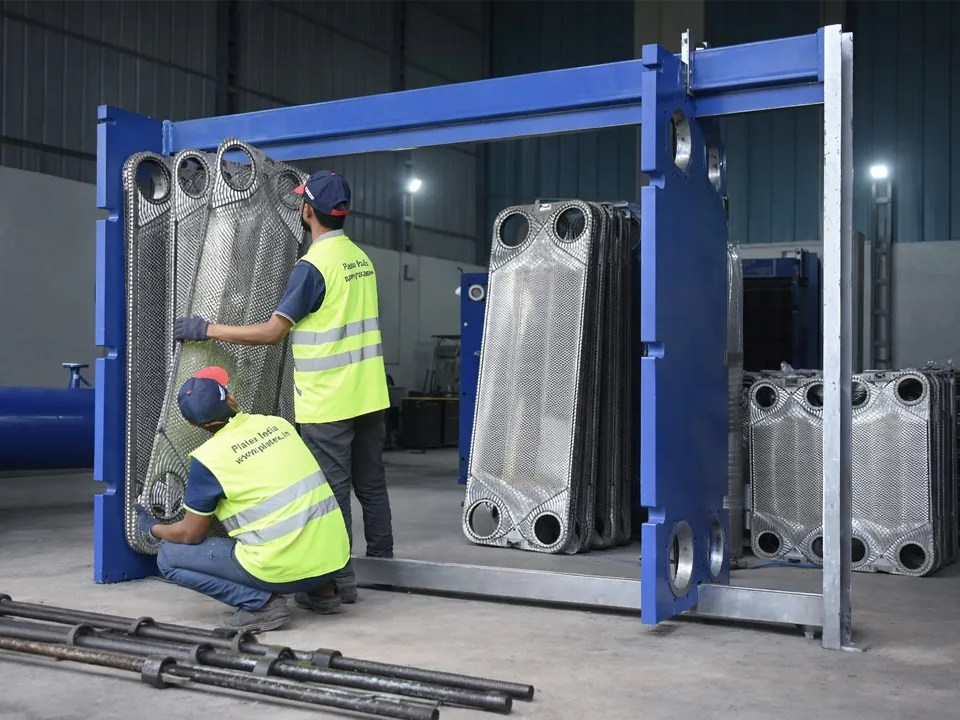
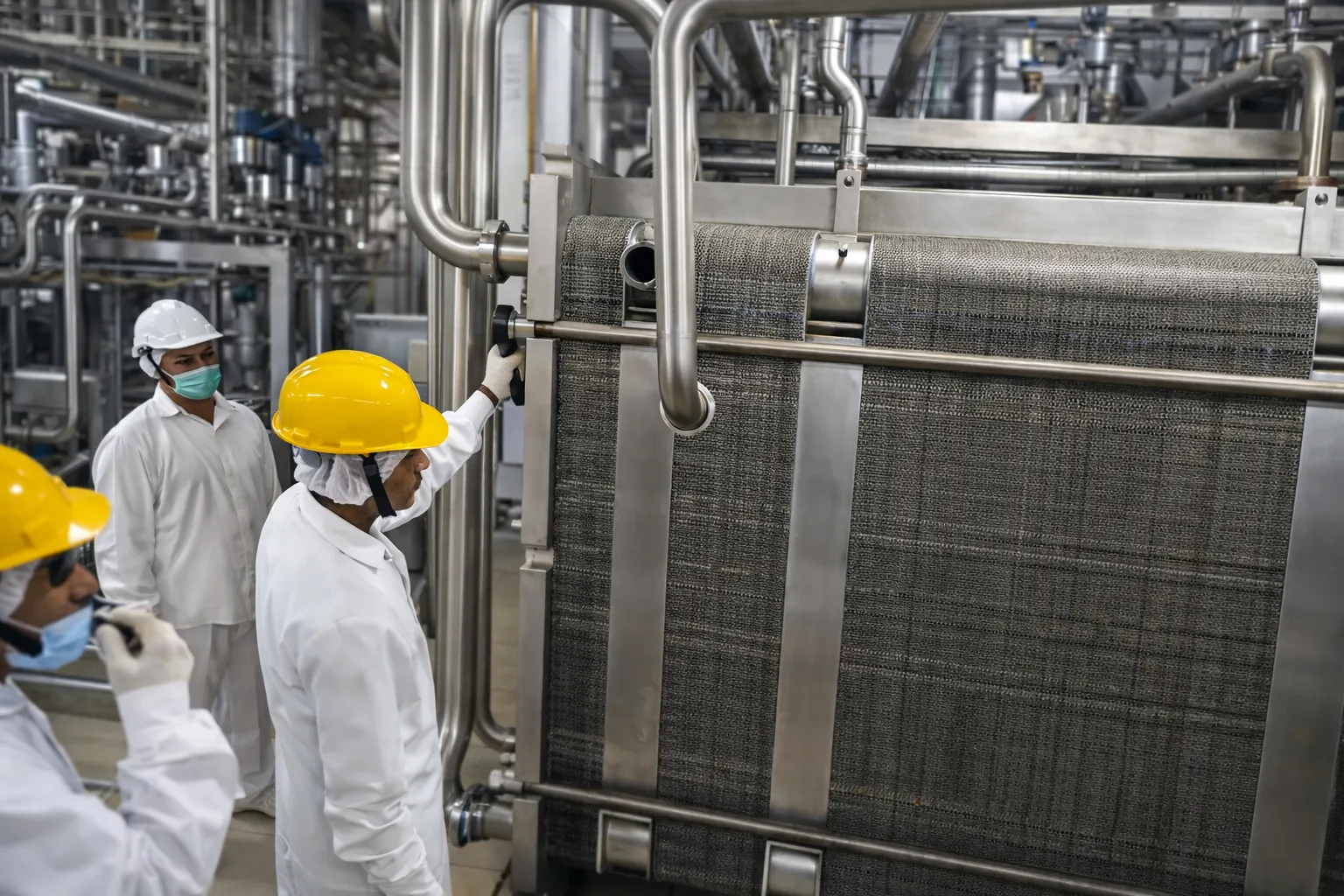
Platex India, established in Pune, Maharashtra, provides expert heat exchanger servicing solutions aimed at improving thermal efficiency and optimizing operational performance across a wide range of industrial applications. Supporting clients across Maharashtra and nearby regions, the company focuses on precision inspection, systematic cleaning and performance optimization of various heat exchanger types. These services help industries improve heat transfer efficiency, minimize energy loss and extend equipment lifespan.
For detailed service evaluation, maintenance planning, and performance assessment, industries are encouraged to contact Platex India for technical consultation or service scheduling tailored to specific operational requirements. The skilled team at Platex India provides condition based servicing, application specific recommendations and dependable after-service support to help customers maintain thermal efficiency, reduce downtime and improve long-term equipment reliability.
Advantages of Heat Exchanger Servicing
Improved Efficiency
Regular industrial heat exchange servicing removes fouling and scaling, improving heat transfer performance.
Extended Equipment Lifespan
Process heat exchanger servicing Maintenance prevents corrosion and material degradation in stainless steel and copper alloys.
Reduced Downtime
Timely heat exchanger servicing minimizes unexpected failures and operational interruptions.
Low-Cost Functioning
Efficient heat exchange lowers energy consumption and operational costs to a large extent.
Safety Compliance
Heat transfer system inspection helps detect leaks, corrosion and mechanical wear at an early stage, maintaining strict adherence to industrial safety norms and regulatory standards.
Advanced Cleaning Techniques
Chemical cleaning services for heat exchangers provide deep removal of scale, fouling and deposits, ensuring efficient internal cleaning without complete equipment dismantling.
Services Provided by Us
Chemical Cleaning
Chemical cleaning removes scale, fouling, sludge and process deposits from heat transfer surfaces using controlled descaling agents. This method restores thermal efficiency, improves heat transfer performance and minimizes energy loss without damaging base materials.
Re-Gasketing
Re-gasketing involves the replacement of worn or damaged gaskets to restore proper sealing and prevent cross-contamination or leakage. Approved plates are fitted with high-quality gaskets using clipping or bonding methods as per design specifications.
External condition inspection
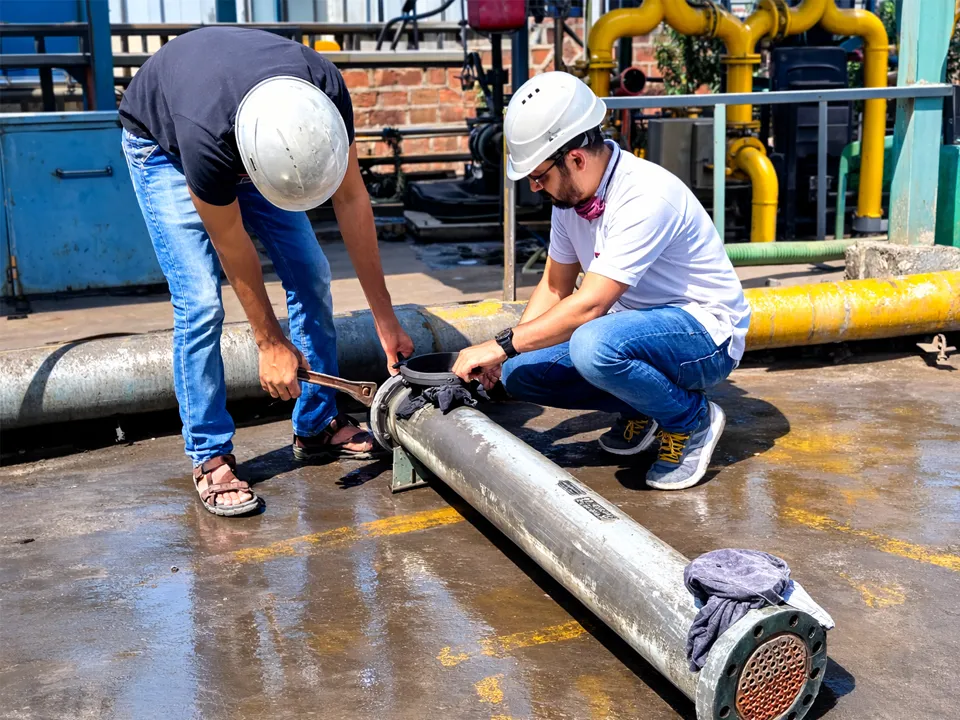
Technicians conduct a detailed visual and non-destructive examination of the outer shell, frame and connections of the exchanger to identify corrosion, leak or mechanical damage.
Detailed plate and gasket evaluation
Each plate and gasket is carefully inspected for wear, deformation, fouling or degradation using precision tools and magnification.
Safe dismantling
The stainless steel exchanger is carefully disassembled in a controlled environment following strict safety protocols to protect personnel and equipment.
Gasket removal
Old gaskets are precisely removed using manual and pneumatic tools to avoid scratching plates. This clean extraction prevents contamination in reassembly, providing a contamination-free seal for reliable performance.
Drying and surface inspection
Plates are thoroughly dried using compressed air and low-heat methods to minimize moisture, preventing corrosion during storage or reassembly.
Plate crack and pinhole checking
Advanced dye penetrant testing and visual aids detect microscopic cracks, pinholes or corrosion pits that could lead to leaks.
Reassembly with correct compression
Plates and gaskets are reassembled into the frame with high-accuracy rotational force tools to achieve exact compression settings as per manufacturer specs.
Maintaining Plate Pack
The plate pack is systematically organized, inspected and secured to maintain accurate layer sequencing and gap uniformity.
Hydro testing and final inspection
The fully reassembled unit undergoes pressurized hydro testing to verify leak-tightness at operating pressures beyond standard limits.